IDEAS LabSeoul National University

Research

From CAGD theory to AI integration in ship design and production

Mathematical foundation in CAGD → hull form modeling → AI-integrated hull form generation → AI applications in shipbuilding
Foundation

CAGD Theory

  • B-splines
  • T-splines
  • G¹ Bézier interpolation
  • T-junctions
Modeling

Hull Form Modeling

  • Cp curve variation
  • Hydrostatic constraints
  • Section curves
  • Fairing
Integration

AI-Integrated Design

  • Reinforcement learning
  • LLM agents
  • Function calling
  • ML resistance estimation
Applications

AI in Shipbuilding

  • Corrosion detection
  • Outfitting automation
  • Maritime big data

Highlights

01 · CAGD Theory

Surfaces over curve networks and T-splines

Our foundation is the mathematics of free-form curves and surfaces. We developed methods to build G¹-continuous surfaces over boundary curve networks with T-junctions, and local T-spline surface skinning with shape preservation — the basis for representing complex hull geometry.
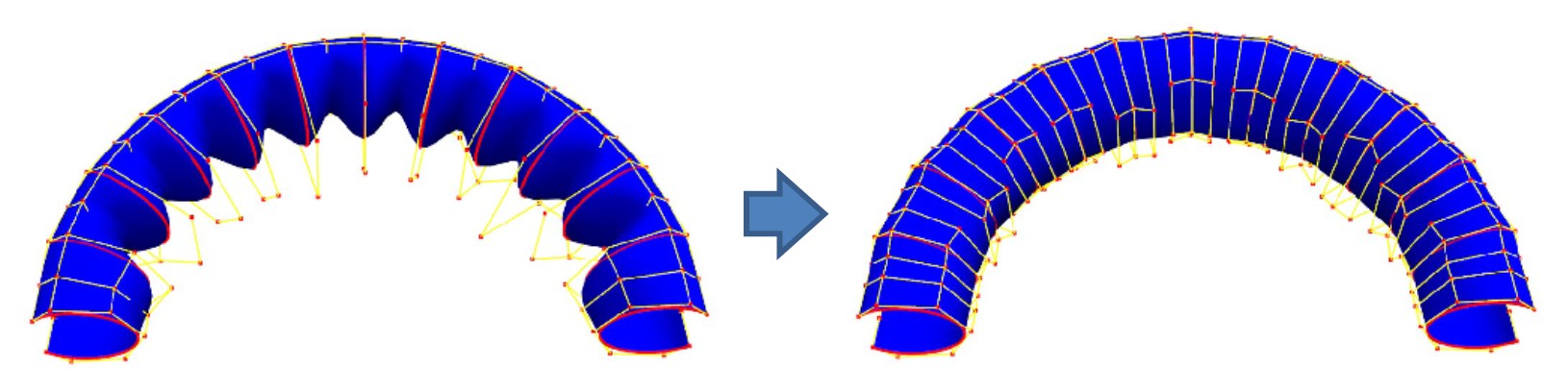
  • Constructing Bézier surfaces over a boundary curve network with T-junctions (CAD, 2012)
  • Local T-spline surface skinning with shape preservation (CAD, 2018)
  • Bézier surface interpolation with T-junctions at a 3-valent singular vertex (CAGD, 2018)
Surfaces over curve networks and T-splines
T-spline surface skinning.
02 · Hull Form Modeling

Hull form design and optimization process

We apply CAGD to ship hull representation, modification and generation that satisfies design constraints. Our in-house hull design program supports hull form variation, surface generation and offset extraction, and is used with CFD, model tests and sea-trial data in an optimization loop developed with SNU partners and KRISO.

  • Study on hull optimization process considering operational efficiency in waves (Processes, 2021)
  • Hull form reconstruction from insufficient data conforming to hydrostatic constraints (IJNAOE, 2026)
In-house hull design program — section-based hull form modeling (video).
02 · Hull Form Modeling

Direct prismatic coefficient variation

Classic 1−Cp variation keeps section shapes but limits variety; editing sections by hand is slow. We vary Cp directly on the hull surface using free-form deformation and constrained interpolation, and use parametric Cp-curve functions to create hull forms with a parallel middle body intuitively.

  • Intuitive hull form variation with a parallel middle body based on Cp curve modification (Ocean Engineering, 2025)
  • Direct prismatic coefficient variation to hull form surface (IJNAOE, 2024)
  • Entrance and run angle variations preserving the prismatic coefficient (IJNAOE, 2023)
Hull form variation by Cp curve modification in our program (video, Korean captions).
03 · AI-Integrated Design

Reinforcement learning for optimal hull forms

An RL agent modifies fore and aft parts of the hull, receives total resistance as reward, and learns variations that reduce resistance while keeping principal particulars. PPO and DDPG agents reduced total resistance by about 2.5% in our case study.
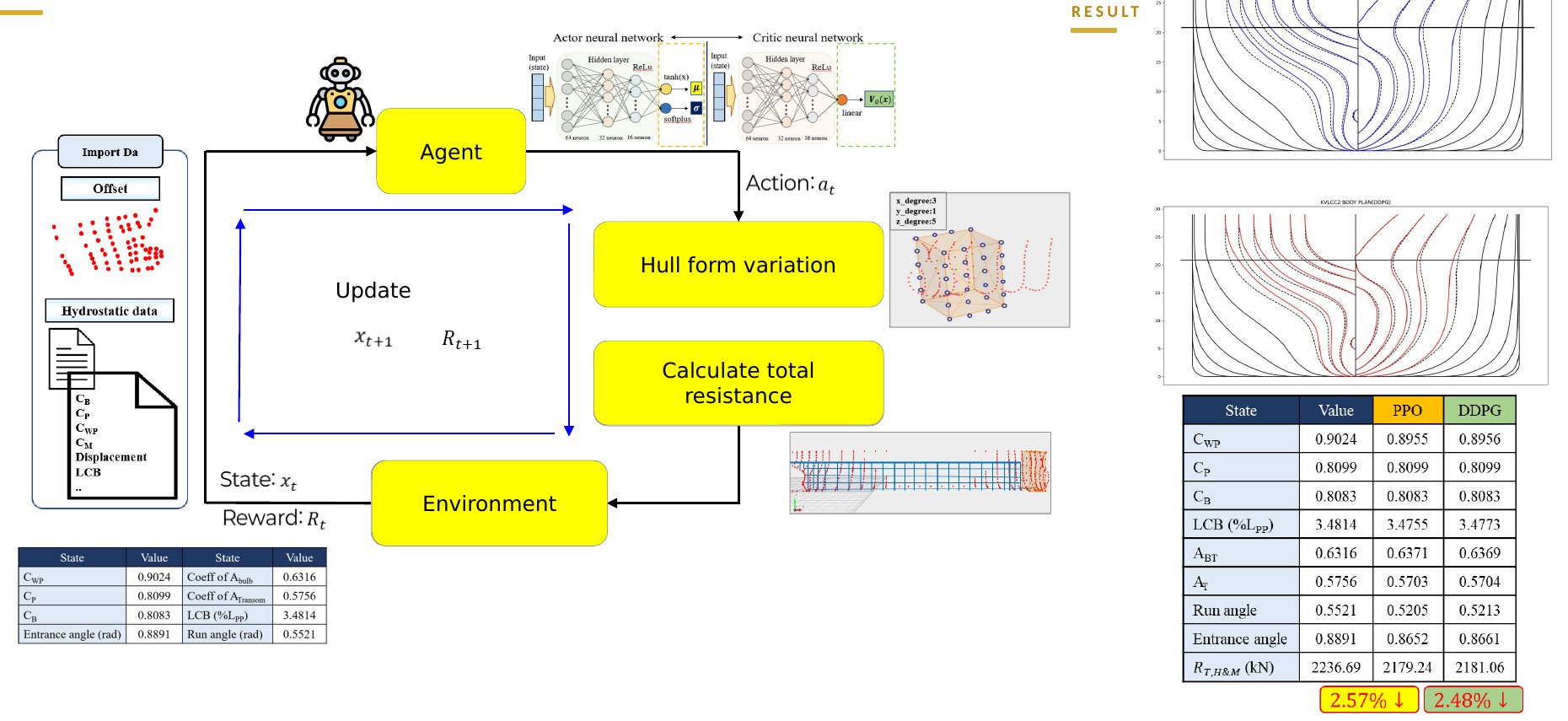
  • Reinforcement learning-based optimal hull form design with variations in fore and aft parts (JCDE, 2024)
Reinforcement learning for optimal hull forms
Agent–environment loop for hull form variation.
03 · AI-Integrated Design

LLM agents with function calling

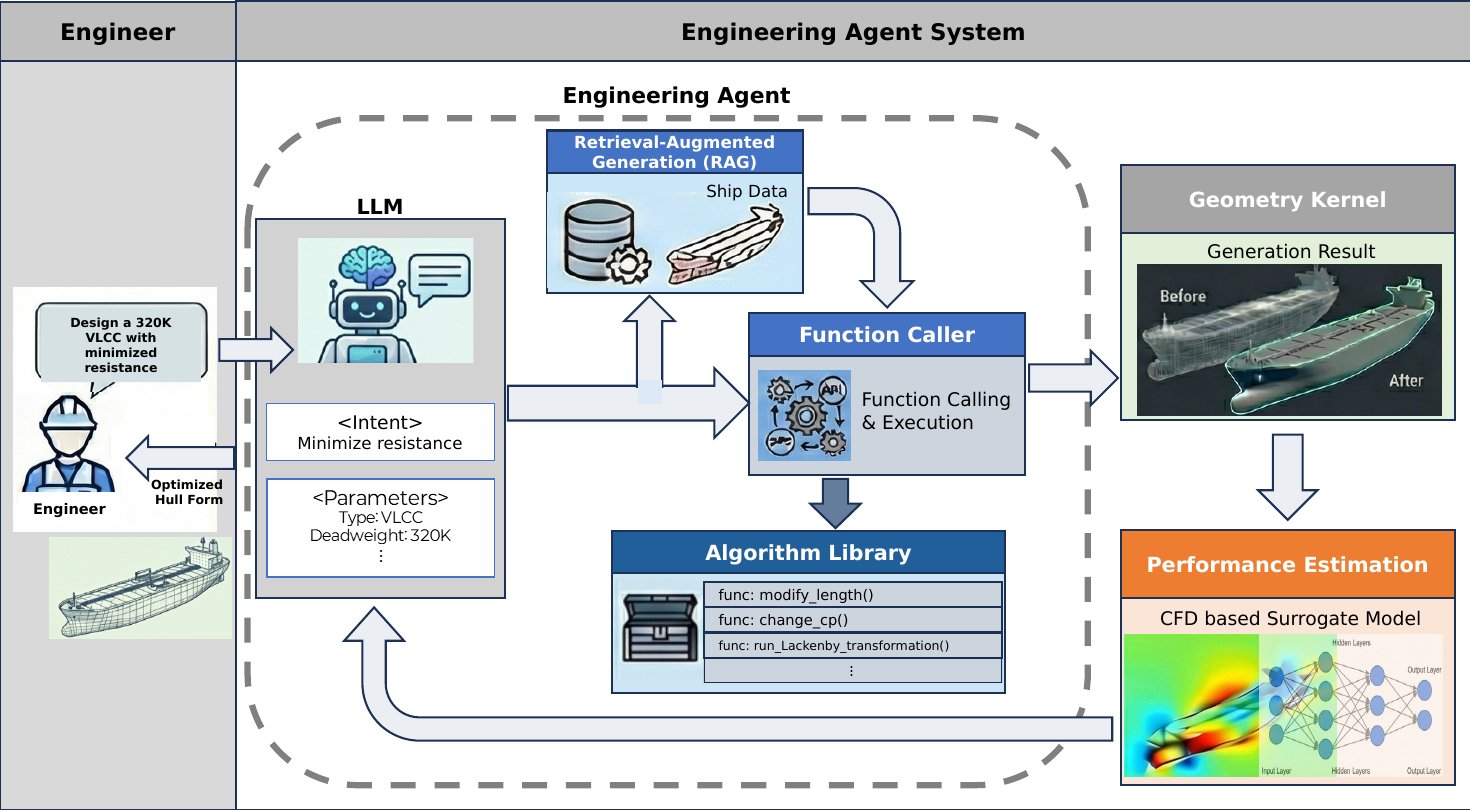
An engineering agent turns a designer's request (e.g. “design a 320K VLCC with minimized resistance”) into intent and parameters, retrieves ship data with RAG, calls hull-variation functions in a geometry kernel, and checks performance with a CFD-based surrogate model — closing the loop automatically. This is the core of our NRF project (2026–2030).
LLM agents with function calling
Engineering agent system for intelligent hull form design.
04 · AI in Shipbuilding

Corrosion area detection and depth prediction

CNN-based models detect corroded areas in images and predict corrosion depth by mapping measured specimen thickness to detected regions, supporting inspection and safety diagnosis of marine structures.
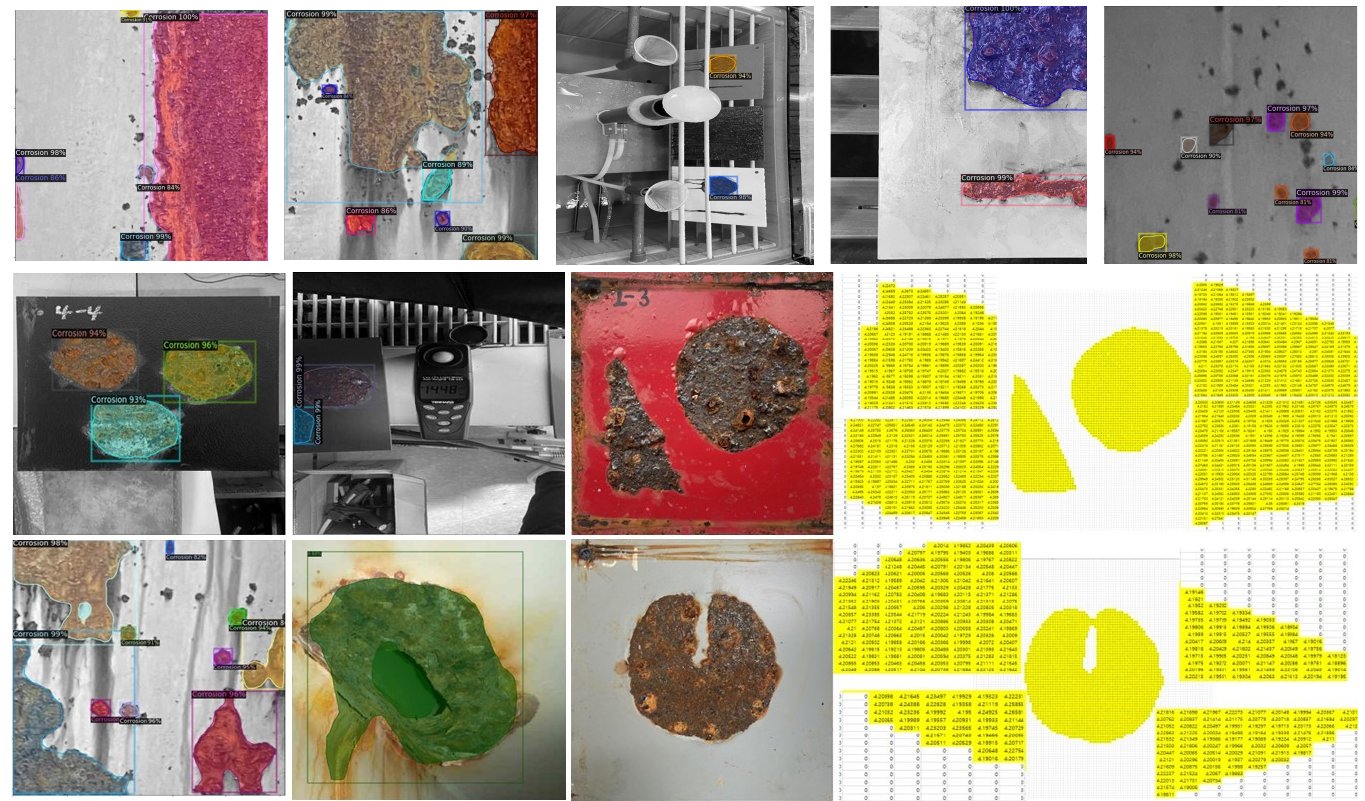
  • Corrosion area detection and depth prediction using machine learning (IJNAOE, 2024)
Corrosion area detection and depth prediction
Detection results on corrosion specimens and ship images.
04 · AI in Shipbuilding

Outfitting design automation

With KEIT support, we develop reinforcement-learning models for equipment arrangement and pipe routing combined with a digital knowledge base, to automate ship outfitting design (2023–2027).
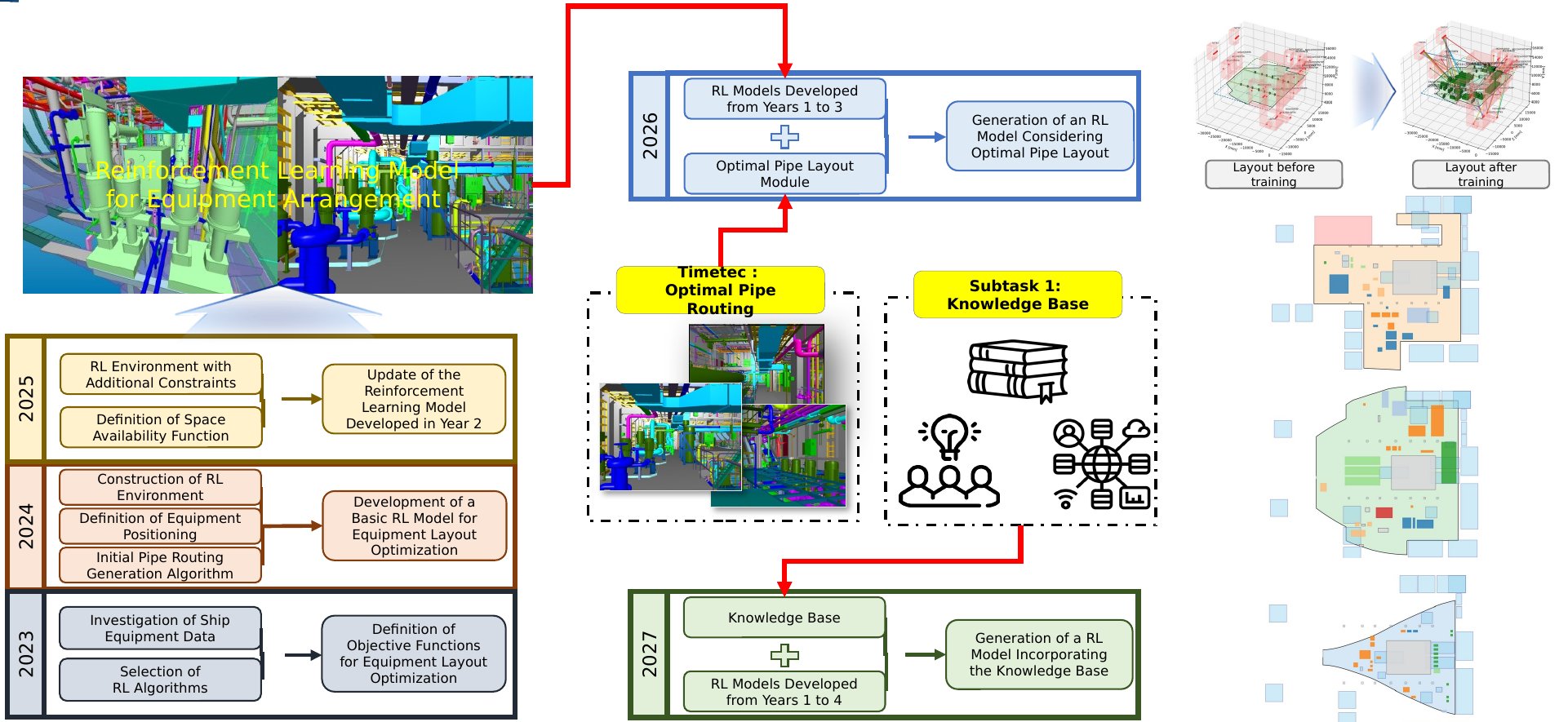
Outfitting design automation
Roadmap of the digital-knowledge-based outfitting design automation system.
Toward production automation

Shipyard welding robots

Our roots in production automation go back to doctoral research on a mobile welding robot for double-hull blocks: a PDA-based teaching pendant program and collision-free torch path generation. This experience underpins our long-term goal of linking 3D design models directly to welding robots in the shipyard.
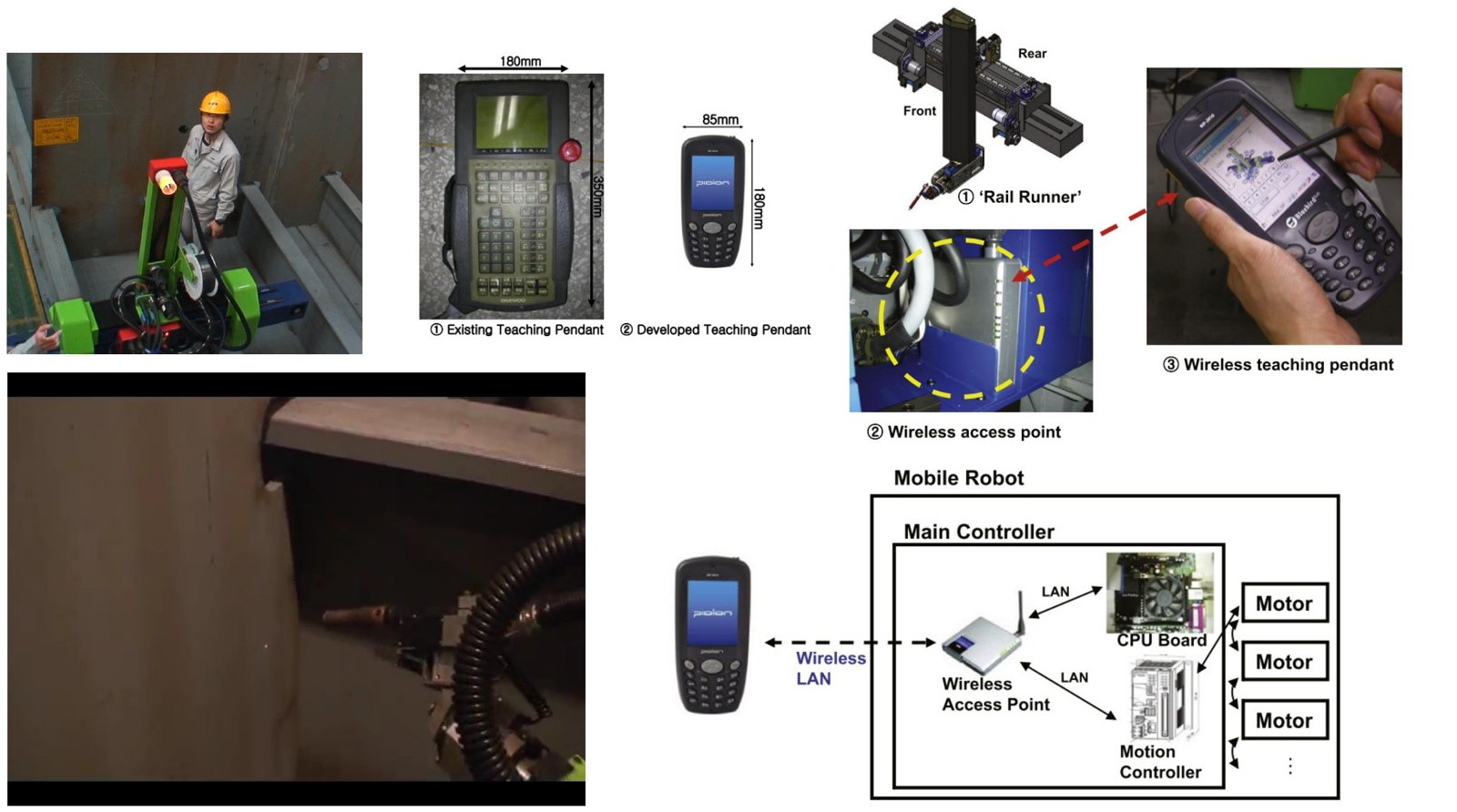
  • Design of a teaching pendant program for a mobile shipbuilding welding robot using a PDA (CAD, 2010)
  • Workspace analysis to generate a collision-free torch path for a ship welding robot (JMST, 2009)
Shipyard welding robots
Mobile welding robot project: robot in a double-hull block, developed wireless teaching pendant, and system configuration.

Research plan

Three active projects fuel a 5-year mid-term plan, evolving toward a 10-year vision.

Mid-term · within 5 years

LLM-based early ship design automation framework

  • LLM agent deepening — complete the NRF project and expand function-calling capabilities
  • ML resistance estimation — continue ML-based hull form performance and optimization research
  • Smart shipyard AI — apply AI to shipyard problems beyond design
  • Industry impact — reduce designer effort and strengthen shipbuilding competitiveness
Long-term · 10 years and beyond

Intuitive design + integrated design–production automation

  • Non-expert accessible design — ship design systems usable by non-specialists
  • Design–production integration — 3D models linked to welding robots toward full automation
  • Production automation robotics — building on doctoral welding-robot work, toward humanoid robots
  • Next-generation CAD kernel — kernel R&D and legacy data conversion for shipyard CAD transition
  • Foundational CAGD research — B-spline and T-spline theory with international collaborators